Ethical Hacking Series: Networking, IPs and Ports Explained for Hackers
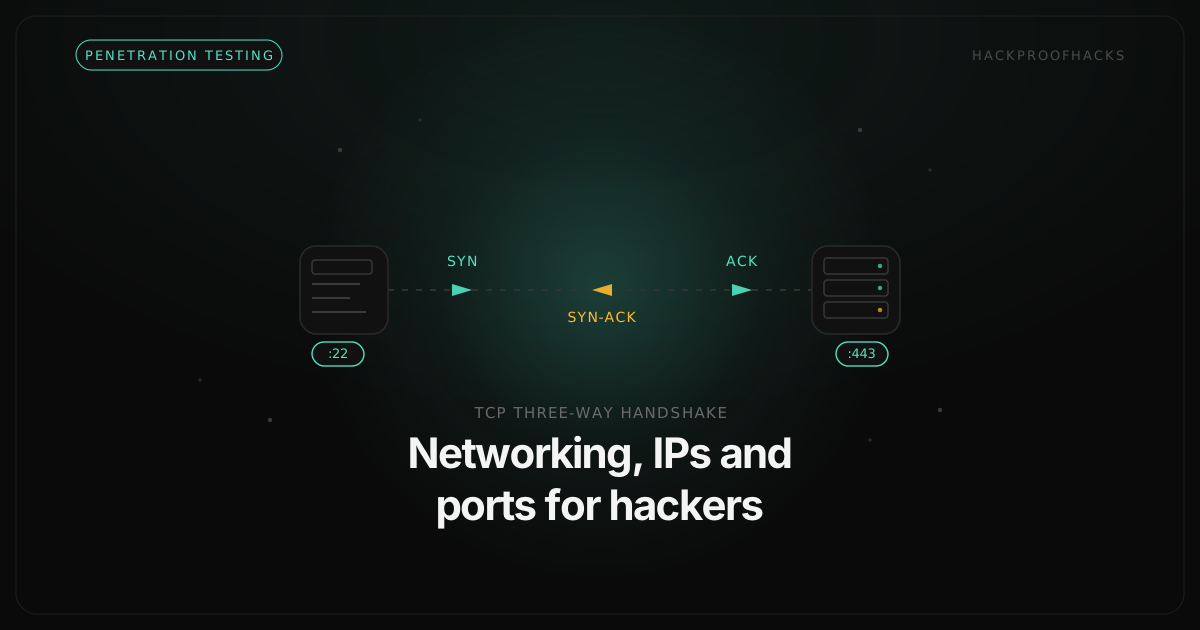
The networking foundations every hacker actually needs, IP addresses, ports, protocols and the handshake, explained the way they matter on a real engagement.
Type to search across the blog, guides, tools, and services.
Tutorials, vulnerability analysis, and attack breakdowns, written for practitioners at every level.
The networking foundations every hacker actually needs, IP addresses, ports, protocols and the handshake, explained the way they matter on a real engagement.
A grounded roadmap into cybersecurity, from the foundations you actually need to the roles you can aim for and the first job that gets you in the door.
A hacker's guide to locking down your home network, six practical steps that close the doors attackers actually use, explained in plain language anyone can follow.
Learn to automate the boring parts of recon with Bash, chaining subdomain enumeration, probing and content discovery into one repeatable script you actually own.
Why cybersecurity is not optional for any business, explained by someone who gets paid to break in, with the real costs, the common attack paths, and where to start.
The through-wall WiFi sensing you saw on screen is real. Here is the physics of WiFi CSI, and a hands-on build with a cheap ESP32 that detects presence, motion, and breathing through a wall — plus an honest look at the body-pose 'skeleton'.
How hackers use waybackurls to find vulnerabilities in forgotten pages — pull a site's old URLs from web archives and turn that history into real findings.
A hands-on API reconnaissance guide with real commands: pull endpoints out of JavaScript, find Swagger and OpenAPI docs, run GraphQL introspection, mine old versions, and map the whole API surface before you test it.
OS command injection is one of the most dangerous web vulnerabilities, often leading straight to full server compromise. Learn how it works, how attackers detect it, and how to prevent it properly.
A clear, practical guide to CSRF — how attackers make a victim's browser send unwanted authenticated requests, the conditions that make it possible, and the modern defences (SameSite cookies, anti-CSRF tokens) that stop it.
A complete, practical guide to cross-site scripting (XSS): the three main types, how attackers actually exploit them, the real-world impact, and the modern defences that stop them — output encoding, Content Security Policy, and more.
A practical, no-fluff roadmap for getting started in bug bounty hunting in 2026 — the skills to learn first, the tools that matter, how to pick your first target, and how to write a report that actually gets paid.
HTTP security headers are one of the cheapest, highest-impact defences you can add to a website. This guide explains each header that matters — CSP, HSTS, cookie flags, and more — what attack it stops, and the value to set.
Broken access control is the most common serious web vulnerability, and IDOR is its most reported form. Learn how these access-control flaws work, how testers find them, and how to fix them properly with server-side authorisation.
A hands-on JWT security guide: how JSON Web Tokens work, the vulnerabilities that plague them, and three worked tests with jwt_tool and hashcat, from alg:none forgery to algorithm confusion and cracking weak secrets.
A deep, practical guide to SSRF — how attackers trick a server into making requests on their behalf, why cloud environments make it so dangerous, and the layered defences that actually prevent it.
A hands-on subdomain enumeration guide with real commands: certificate transparency search, passive aggregation with subfinder and amass, DNS brute-forcing, probing live hosts with httpx, and turning a raw list into real findings.
A hands-on Hydra guide to online password attacks: test SSH, FTP and web logins for weak credentials, read the results, and learn how to defend against it.
The essential Linux command-line tools every ethical hacker needs — navigating, searching, piping and networking, explained with real day-to-day examples.
A step-by-step roadmap to become an ethical hacker using only free resources — the foundations to build, the labs to practise on, and the order to do it in.
A practical guide to network service enumeration: scan ports, identify service versions, and pull real data out of SMB, SSH, FTP, DNS and SNMP with Nmap.
A complete, practical Burp Suite guide: Proxy, Repeater, Intruder and Decoder explained with a real testing workflow, examples, and beginner setup steps.
A hands-on ffuf guide to finding hidden directories, files and parameters on a web target — real commands, the right wordlists, and how to filter the noise.
A practical, hands-on guide to SQLmap — the automated SQL injection tool every pentester and bug bounty hunter should master. Real commands, lab walkthroughs, WAF bypass, common mistakes, and pro tips from a working ethical hacker.
A deep-dive into the exact techniques hackers use to deface websites — CMS exploits, web shells, SQL injection, DNS hijacking, and more. Written by an ethical hacker with real examples, lab exercises, and practical defences.
A hands-on walkthrough for building a safe, legal offensive security lab with VirtualBox, Kali Linux and DVWA, then landing your first SQL injection, XSS and command injection.
What the dark web really is, how Tor works, how to access it safely and legally, and how offensive security researchers use it for threat intelligence and recon.
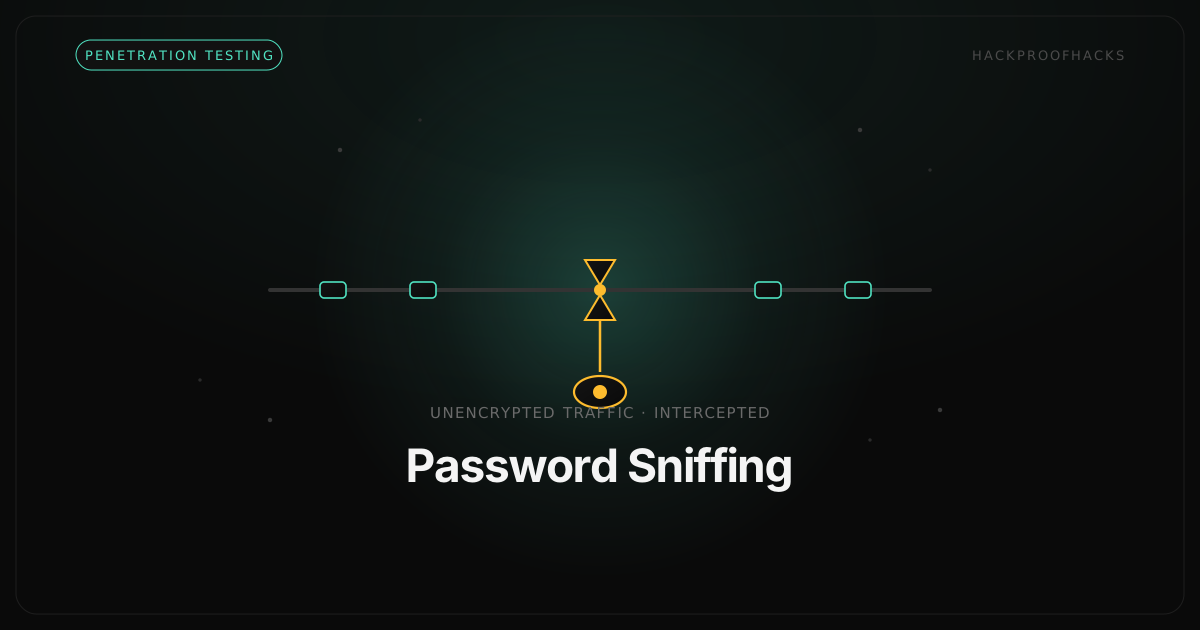
A practical, offensive-security look at password sniffing: how credentials get captured in transit, the tools and man-in-the-middle techniques attackers use, and how to defend against them.
A red team perspective on the psychology of cybercriminals: their motives, how they justify harm, and the human instincts social engineers exploit to break in.
AI is reshaping both attack and defence. Here is an honest look at how it is changing offensive security, where it still fails, and why skilled hackers matter more than ever.
The OWASP Top 10 is the most referenced security standard for web applications. Here's a deep-dive into the 2025 update — what moved, what's new, and how to prioritise your remediation efforts.
Zero-day vulnerabilities are exploited before a patch exists. This post explains how organisations can build detection capabilities, containment procedures, and a response process that doesn't rely on waiting for a vendor fix.
APIs are the backbone of modern applications — and one of the most exploited attack surfaces. This guide walks through how to test an API the way an attacker would, covering reconnaissance, authentication, authorisation, business logic, and GraphQL.
Attackers are using YouTube videos, cracked software lures and hijacked channels to spread information-stealing malware. Here is how the scheme works and how to stay safe.
APT41 has been linked to a new malware loader called DodgeBox and a backdoor named MoonWalk. Here is how they work, the tricks they use, and why they are hard to catch.
A leaked GitHub token with admin access to Python, PyPI and the PSF was found in a public Docker image. Here is how it happened and what it teaches about secret leaks.
No posts in this category yet.
A hacker and a penetration tester use many of the same techniques — the difference is authorisation and intent. A penetration tester has written permission from the organisation that owns the system, operates within an agreed scope, and delivers a report so the organisation can fix what was found. A malicious hacker has no permission, no scope, and no interest in helping anyone fix anything. The techniques overlap entirely; the legal and ethical context is what separates them.
Most compromises go undetected for months because they don't cause obvious disruption. Warning signs include: your server appearing in spam blocklists, Google Search Console flagging malware, sudden unexplained traffic spikes, new admin accounts you didn't create, unfamiliar files in your web root, or customers reporting phishing emails that look like they came from you. The uncomfortable truth is that without proper logging and monitoring in place, you often won't know until the damage is done. A vulnerability assessment can tell you whether your application has the kind of weaknesses that would make this likely.
Report it directly to the organisation through their official contact email or any published security or responsible disclosure policy. Don't exploit it, share it publicly, or sell it. If the organisation has a bug bounty programme on HackerOne, Bugcrowd, or Intigriti, submit it there — you may be eligible for a reward. If they don't respond within a reasonable time (30–90 days is the common standard), you can consider coordinated disclosure through a neutral third party. Never access data you weren't supposed to see, even to prove the vulnerability exists.
Yes — and small businesses are often easier targets precisely because attackers know security budgets are tight. Most attacks aren't targeted campaigns by sophisticated nation-state actors. They're automated scans looking for known vulnerabilities, credential stuffing attacks using leaked password lists, and opportunistic phishing. A small e-commerce site handling payment data is as attractive a target as a large one, sometimes more so because the defences are weaker. The good news: the most common vulnerabilities are also the most fixable, and you don't need an enterprise security budget to address them.
The short list: Burp Suite Pro for intercepting and manipulating web application traffic, nmap for network scanning and service detection, ffuf and gobuster for directory and parameter fuzzing, sqlmap for automated SQL injection verification, Metasploit for certain exploit frameworks, and a Kali Linux installation that brings most of these together. For API testing specifically, Postman or Insomnia for building requests, and Burp Suite for interception. The honest answer though is that the tool matters less than the methodology — a skilled tester with basic tools finds more than an unskilled tester with every tool available.